

The End Of Extraction
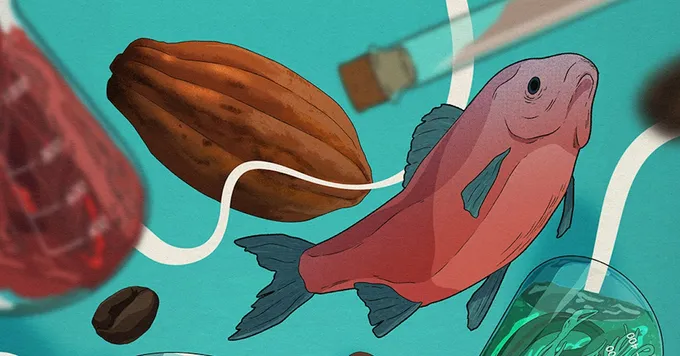
Benjamin Siegel opens with two scenes linked by fishmeal. One is a Norwegian salmon farm. The other is a Peruvian port that sits idle when the anchoveta fishery pauses. Fishmeal has already been replaced in parts of the feed chain by oils from fermentation tanks and engineered crops. Siegel argues this is an old pattern: a resource is grown or mined, a laboratory learns to copy it, and the supply chain moves away from the people who produced the original.
His historical core is a run of cases. Synthetic alizarin from coal tar in 1868 wiped out madder growers, and synthetic indigo, cochineal substitutes and camphor followed. Celluloid, rayon and nylon undercut silk and natural fibres. Haber-Bosch ammonia ended Chile’s nitrate boom. Synthetic steroids displaced Mexican barbasco yams, and insulin ended the use of animal pancreases. Indian opium has survived largely for political reasons, because its farmers are a bargaining bloc.
Siegel says protein language models, synthetic biology and precision fermentation could make substitution faster and more systematic. That raises the stakes for the communities that depend on the commodities being replaced.
He finds that no institution yet ties the rise of a substitute to the restructuring of the region it displaces. A few precedents exist, such as the EU’s sugar restructuring fund, the US tobacco buyout and Peru’s anchoveta quota compensation. Benefit-sharing schemes such as the Nagoya Protocol and the Cali Fund have mostly delivered little.
His proposal is for the EU to levy companies that sell designated substitutes once measurable displacement begins. The levy would decline over a fixed period and fund transition trusts in affected regions, such as cocoa areas in West Africa or Peru’s fishing communities. He admits such trusts risk lobbying capture and permanent subsidy. His conclusion is that politics must give exposed places the means to build a future after their markets disappear.